
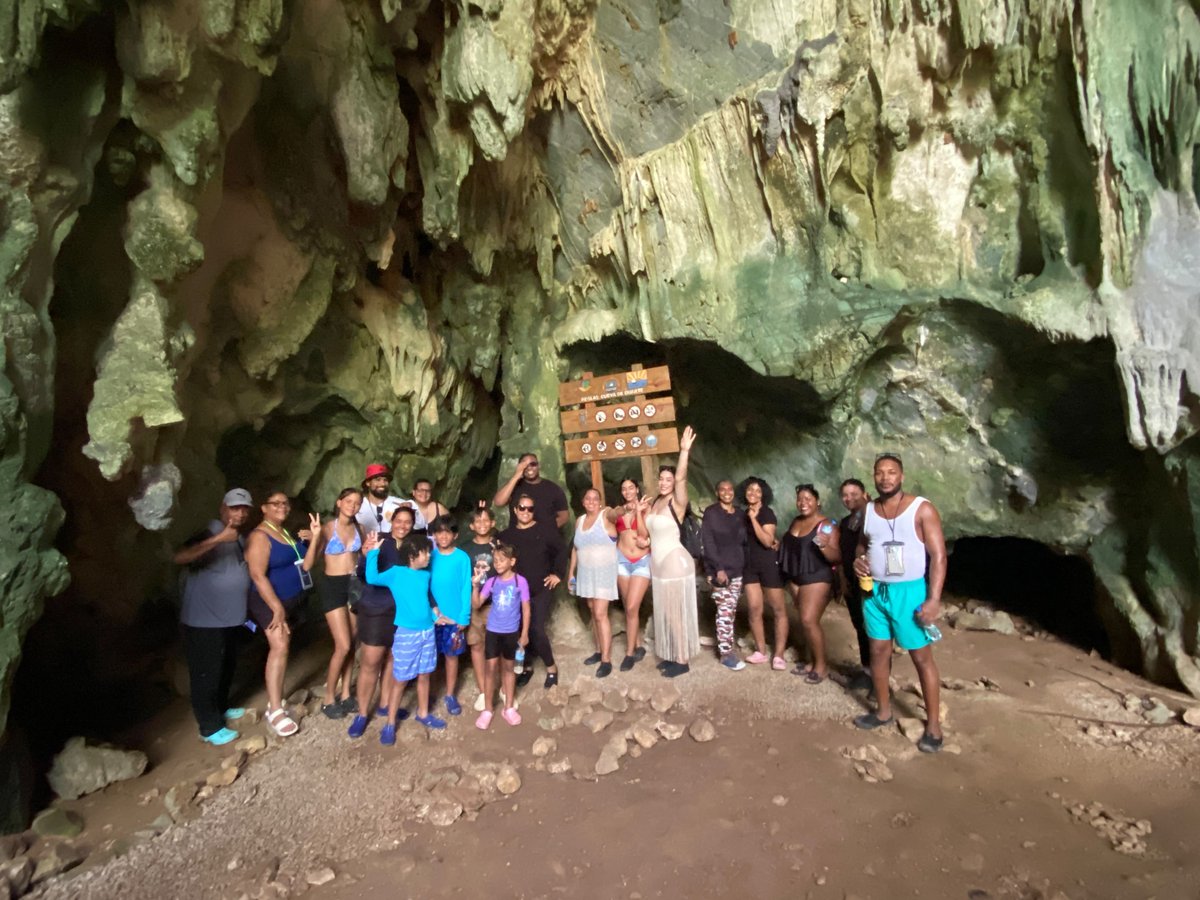
The Caves of Samaná: Limestone, Darkness and Taíno History
Why there are so many caves here
Samaná is largely made of limestone laid down as ancient coral and then lifted above the sea. Rainwater is slightly acidic and limestone dissolves in it, so over a very long time the water has opened joints in the rock into passages, and passages into chambers. The mogotes of Los Haitises across the bay are the same process seen from outside. Around Las Galeras the result is caves at various scales, from shallow coastal hollows the sea still works on, to large inland chambers hung with stalactites.
What it is like inside
Cool, dark and much quieter than you expect — sound behaves strangely in a big chamber. Formations build where water has dripped for millennia: stalactites from the roof, stalagmites from the floor, and columns where the two have met. Bats live in many of the caves and will move when a light passes over them, which startles people the first time and is entirely harmless. Underfoot the ground is uneven and often wet, with mud and slick rock, so this is not somewhere to arrive in sandals.
Taíno rock art
Some caves in the region carry pictographs and petroglyphs made by the Taíno, the Indigenous people of these islands before European contact. Figures, faces, animals and abstract designs appear drawn in charcoal or cut into the rock, often placed where daylight last reaches. The best-known examples are in Los Haitises across the bay, but the peninsula holds others. These marks are fragile and irreplaceable: never touch them, and keep flash photography off unless a guide says otherwise — skin oils and repeated light both do damage that cannot be undone.
Difficulty, light and footwear
Most visits are walking rather than climbing, but the walking is on uneven, wet rock with the occasional low section where you will need to duck. Bring closed shoes with real grip — this is the single thing that most affects how much you enjoy it — and a head torch if you have one, which leaves your hands free for balance. Guides carry lights, but having your own is better. Caves are cool compared with the coast, so a light layer is worth carrying. If anyone in your group is strongly claustrophobic, say so beforehand and we will pick a cave with large open chambers rather than tight passages.
Frequently asked questions
Do you need caving experience?
No. Most visits are walking on uneven ground rather than technical caving. Closed shoes with grip and a light are what matter.
Are there bats in the caves?
Yes, in many of them. They move when a light passes over them, which is startling the first time and entirely harmless. Leave them undisturbed.
Can you photograph the Taíno rock art?
Usually yes, but never touch it and keep flash off unless your guide says otherwise. Skin oils and repeated light cause damage that cannot be reversed.
Ask About Cave Trips