
Comida y Cultura en Las Galeras: Guía Local para Comer Bien
Un Sabor del Verdadero Caribe
La escena gastronómica de la República Dominicana es uno de sus tesoros más subestimados — y Las Galeras, con sus raíces de pueblo pesquero y herencia afrodominicana, sirve algunos de los sabores más auténticos que encontrarás en cualquier lugar. Esto no es comida de bufete. Es fresca, honesta, cocinada con recetas generacionales, y a menudo servida por la misma familia que la pescó esa mañana.
Pescado con Coco: El Plato Estrella
Si pruebas un plato en Samaná, que sea pescado con coco — pescado fresco cocinado a fuego lento en una salsa rica y ligeramente dulce de leche de coco con ajo, tomate y ají. Es el plato insignia de la región, nacido de la mezcla de tradiciones culinarias caribeñas y africanas. Pídelo en cualquier chiringuito de playa o restaurante familiar a lo largo de la costa. Generalmente se sirve con arroz, tostones y una pequeña ensalada.
Dónde Comen los Locales
Sáltate los restaurantes turísticos de la calle principal. La mejor comida está en lugares pequeños que las guías se pierden — un chiringuito en La Playita donde la esposa del pescador asa la pesca del día, un colmado donde puedes conseguir el plato del día por unos pocos cientos de pesos, o una palapa junto a la playa que solo abre los fines de semana. Pregúntale a tu guía — los conocemos a todos, y ellos nos conocen.
Comida Callejera y Snacks
Empanadas, yaniqueques, agua de coco fresca directamente de la cáscara, y morir soñando (un batido hecho con jugo de naranja y leche — confía en nosotros con este). Al final de la tarde es cuando los vendedores callejeros se instalan a lo largo del malecón y cerca de las entradas de la playa. Trae billetes pequeños y sigue tu nariz.
Cultura: Música, Merengue y Comunidad
Samaná tiene una identidad cultural única moldeada por los afroamericanos libres que se establecieron aquí en la década de 1820, junto con las influencias taínas y españolas que dan forma al resto de la RD. Escucharás bachata y merengue en todas partes, pero en la península también captarás ecos de esa herencia angloamericana caribeña — apellidos ingleses, pequeñas iglesias metodistas, y una calidez hacia los extranjeros que se siente genuinamente acogedora. Los fines de semana por la noche, la música en vivo se desborda de los pequeños bares — únete, baila mal, pide otra Presidente. A nadie le importa.
En Nuestro City Tour
Si quieres experimentar todo esto en una tarde, nuestro City Tour incluye visitas a puntos de interés locales, una parada para comida típica dominicana, y tiempo para explorar el malecón — un gran preludio antes de salir en tus propias aventuras.
Platos que vale la pena pedir más allá del pescado
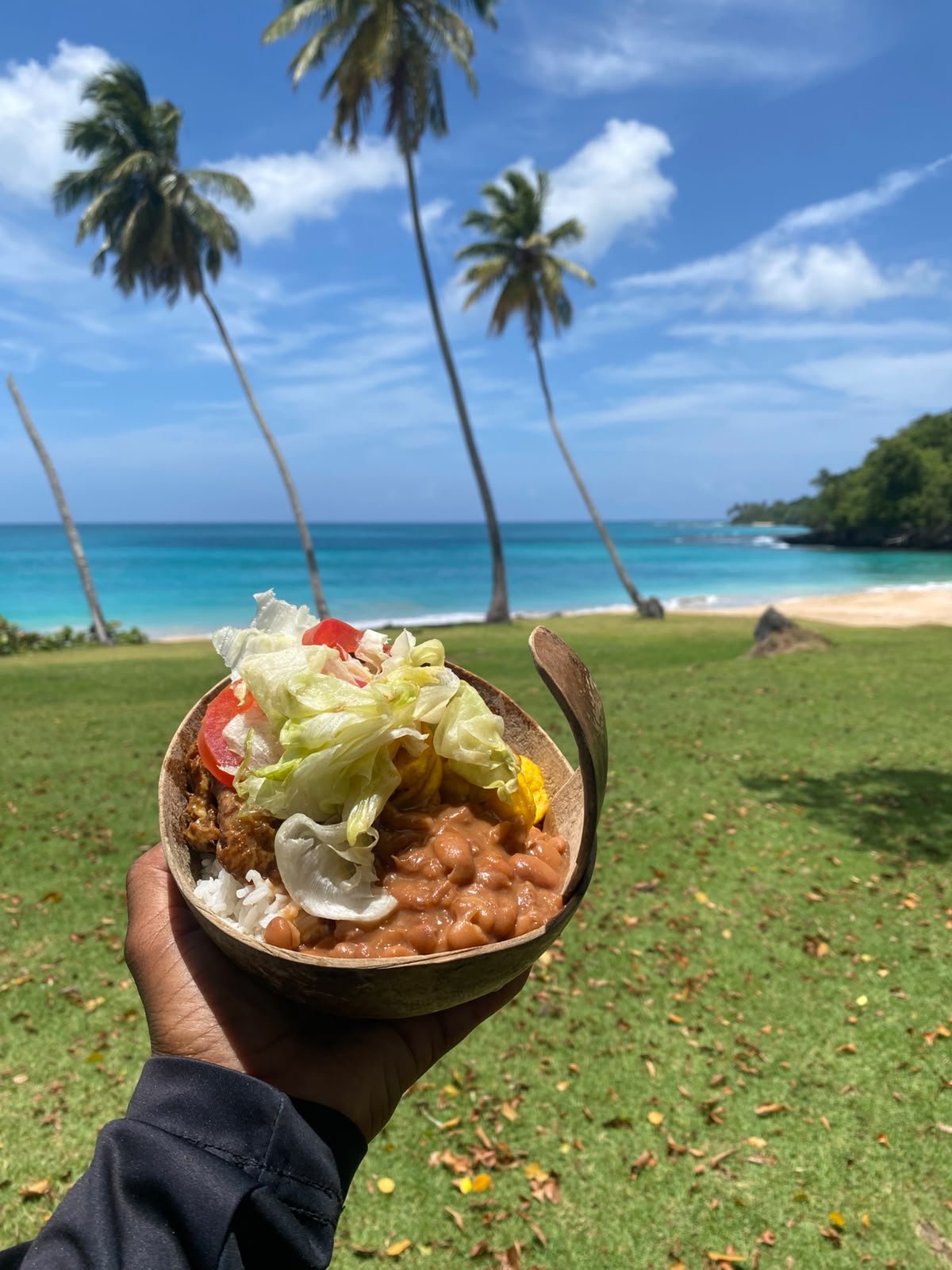
El pescado con coco es el plato por el que se conoce a Samaná, pero la mesa dominicana de cada día también merece explorarse. La bandera —arroz, habichuelas guisadas y carne— es el almuerzo estándar y lo más fiable de cualquier menú. El sancocho es el guiso denso y de cocción lenta que se prepara para reuniones y tardes de lluvia. El mangú, plátano majado con cebolla, es desayuno, normalmente con queso frito, salami y huevo. Los tostones y la yuca frita acompañan casi todo. Y si ves mofongo, pídelo: plátano frito majado con ajo y chicharrón, en esta costa a menudo relleno de camarones.
Qué beber
La Presidente, servida bien fría, es la cerveza por defecto y una pequeña institución nacional. El morir soñando —jugo de naranja con leche y azúcar sobre hielo— suena improbable y es maravilloso en una tarde calurosa. Los jugos frescos están por todas partes: chinola, lechosa, limón. La mamajuana es la infusión local de ron, vino tinto y miel macerada con cortezas y hierbas, se ofrece en chupitos pequeños y conviene tratarla con respeto. El café es fuerte, dulce y se sirve corto.
Frequently asked questions
¿Por qué comida es conocida Samaná?
Por el pescado con coco, pescado en salsa de coco y tomate, el plato insignia de la península y herencia de su tradición afrocaribeña.
¿Es seguro comer comida callejera en Las Galeras?
En general sí, y es de lo mejor que se come en el pueblo. Aplica el criterio habitual: puestos concurridos, con rotación alta y comida hecha al momento delante de ti.
¿Aceptan tarjeta los restaurantes de Las Galeras?
Algunos sí, muchos no. Lleva pesos dominicanos en efectivo, sobre todo para los sitios locales pequeños y los vendedores callejeros.
Reservar el City Tour