
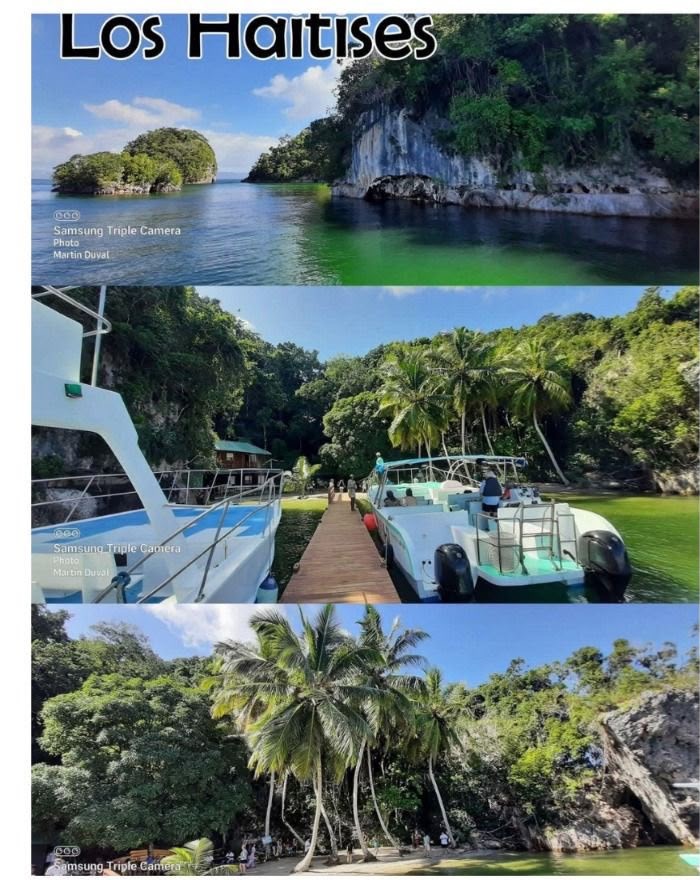
Los Haitises National Park: Mangroves, Caves and Taíno Rock Art
A landscape that looks like nowhere else in the Caribbean
Los Haitises sits on the southern shore of Samaná Bay, and the first thing you notice is the shape of it. Dozens of rounded limestone hills — mogotes — rise abruptly out of shallow green water, their sides draped in vegetation that somehow clings to bare rock. They are the eroded remains of an ancient coral platform, and they make the bay look more like Vietnam's Ha Long Bay than the beach postcards most visitors associate with the Dominican Republic. There are no roads in. The park is reachable only by boat, which is a large part of why it still feels untouched.
The caves and their Taíno rock art
The limestone is riddled with caves, and several of the largest are part of every tour. Inside, on the walls and ceilings, are pictographs and petroglyphs left by the Taíno — the Indigenous people who lived across these islands long before European contact. You will see figures of people, animals, faces and abstract shapes drawn in charcoal and carved into the rock. Guides will point out the clearest panels and explain what is known and what is still debated about them. The caves are cool, dim and often home to bats; the ground can be slick, so shoes with grip matter more than you would expect on a boat trip.
Mangroves and birdlife
Between the mogotes the boat slows and threads through narrow mangrove channels, where the engine drops to idle and the noise falls away. This is the part most people remember. Los Haitises is one of the best birdwatching sites in the country: frigatebirds wheeling overhead, brown pelicans diving, herons and egrets standing in the shallows. Bring binoculars if you own a pair, and keep your camera accessible — the light in the channels is beautiful in the morning, and the best sightings tend to be brief.
Getting there from Las Galeras
From Las Galeras the park lies across the bay, so this is a full-day trip rather than a morning excursion. The crossing is part of the experience — open water, the coastline of the peninsula behind you, and a reasonable chance of spotting dolphins or, in season, whales on the way. Sea conditions vary, so if you are prone to seasickness take something before departure rather than after. Departure times shift with the weather and the tide, which is why we confirm the plan with you the day before rather than promising a fixed schedule weeks out.
What to bring, and when to come
Pack a light rain jacket regardless of the forecast — this is one of the wettest corners of the Dominican Republic, and short showers are common even in dry months. Add reef-safe sunscreen, a hat, water, closed shoes with grip for the caves, and a dry bag or zip bag for your phone. The drier, calmer window runs roughly from December through April, which overlaps neatly with whale season, but the park is worth visiting year-round. Mornings are generally calmer on the water and better for both birds and photographs.
Frequently asked questions
Can you visit Los Haitises without a boat?
No. There is no road access into the park, so every visit is by boat. Tours from Las Galeras cross Samaná Bay, which makes it a full-day outing.
Is Los Haitises suitable for children?
Generally yes, though it is a long day on the water and the cave floors can be slippery. Children who are comfortable on boats usually enjoy it. Tell us their ages when you book so we can plan the timing and life jackets.
What is the best month to visit Los Haitises?
December through April is typically drier and calmer on the water. That said, Los Haitises is rainy by nature year-round, so a light rain jacket is always worth packing.
Book the Los Haitises Tour